Contact: Alison London
Meadowbrook
Press
952.930.1100
ext. 110
alondon@meadowbrookpress.com
Q & A with
Expert Nutritionist,
Bridget Swinney is a
registered dietician and holds a master’s degree in nutrition. She is the
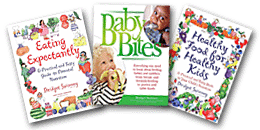
award-winning author of Eating
Expectantly and Healthy Foods for
Healthy Kids—and recently released her latest title Baby Bites. Swinney has been featured on national radio and
television programs including Good
Morning America, Weekend Today,
and the Food Network.
Q: What is the single most pressing issue facing children and health today?
Definitely childhood obesity—it’s an issue that if we don’t do something about now, the consequences will be very dire. It’s estimated that 1 out of every 3 kids born in 2000 will be diagnosed with Type 2 Diabetes in their lifetime. The implications—both emotional and economic are huge. Kids are now being diagnosed with diabetes at an alarming rate—something that used to be an adult disease.
Q: Why is childhood obesity such an epidemic and what can we do to prevent it?
There are many potential causes,
the first of which is the obesity epidemic among adults—it’s much worse than
kids. Since kids follow the examples of their parents, they don’t have good
role models for healthy eating and fitness. We need to look at the big
picture—many things need to be changed:
·
Portion sizes in
restaurants
·
Healthier vending
options
·
Cities that are built
for active lifestyles with hiking and biking trails
·
Safe ways for kids to
walk or bike to school
·
Businesses that are
more breastfeeding friendly
Q: When should prevention begin?
Prevention has to start in infancy.
There are simple things that parents can do at the beginning like learning
their baby’s signs of hunger and fullness. Many parents don’t realize that
healthy babies will eat what they need to grow and thrive—they don’t need to
push them to finish their bottle or what’s left in the baby food jar. There is also long standing myth that a
healthy baby means a fat baby. While babies do have a normal amount of body
fat—they generally thin out when they become more mobile.
Another thing parents can do is
promote an active lifestyle starting with infancy. Babies and young kids don’t
need to watch TV—this sets them up for sedentary habits—not to mention keeps
them from activities that would are more brain building. For toddlers and young
children, parents should get their kids into the habit of playing outside and
going for walks on a daily basis. Kids who play outside burn more calories.
Q: Are healthy eating habits learned at a young age and how do you ensure those habits stick well into teenage years, especially for young woman?------
Habits learned early usually stick
with kids until peer pressure happens! Once your child enters pre-puberty, he
can be more influenced by peers and advertising. So the best a parent can do is
teach their child about good nutrition as well as set good examples, so kids will
know the why as well as the what as they get older. There are some definite
nutrient lapses in teens—particularly young women not getting enough calcium.
Education is key—especially helping kids make the connection with nutrition to
something they are interested in—such as sports.
Q: What is the biggest myth about food and nutrition out there?
That’s a tough one because there
are many. A big one important right now is that most people think that genetics
causes obesity, so if your family is generally pudgy, it’s normal for your
child to be too. Actually there is a genetic component to obesity—but genetics
only permits obesity—it’s environment that causes it.
Q: Why do we have such a skewed sense of “normal” portion size?
We love to get good value for our
money when eating out—restaurants have given us what we want and have increased
the portions so much over the last 20 years that most of us don’t know what
normal is any more! It’s more of a problem because we eat out so much!
Q: How do we ensure a healthier generation of Americans?
Follow my tips from Eating
Expectantly, Baby Bites, and Healthy Food for Healthy Kids!!